
It’s 5:47 p.m.
You have opened the fridge three times. Nothing new has appeared in it.
Somewhere in your phone there are dozens of saved recipes. Every one of them requires something you don’t have: a specific vinegar, a mandoline, forty minutes of attention, or the kind of optimism you had on Sunday.
This is not a recipe problem.
It’s a decision problem.
On weeks when you have nothing left, the hardest part of dinner usually isn’t the cooking. It’s the deciding, the remembering, the “do we have…?” and the low-grade guilt of standing in front of the cupboard eating crackers as a strategy.
So here’s a different approach. Not five recipes. Five formulas — flexible shapes you can fill with whatever you’ve got. They’re not test-kitchen precise. They’re not meant to be. Think of them as scaffolding for the nights your brain has already clocked out.
Before we start: the tired-person rules
A few ground rules that make every formula below easier.
- Good enough is the goal. Dinner on a hard Tuesday needs to be food, ideally warm, preferably with something green near it. That’s the bar.
- Pre-chopped is not cheating. Bagged salad, frozen vegetables, a rotisserie chicken, canned beans, jarred sauce. These exist for exactly this week.
- Repeat freely. If the same dinner shows up twice, nobody is filing a complaint with the authorities.
- One pan, if possible. Every dish you don’t dirty is a small gift to Future You.
And one rule that isn’t negotiable, because it’s about safety rather than vibes: if you’re cooking raw meat, poultry or eggs, an inexpensive digital food thermometer takes the guessing out of “is it done?” We’ll flag the official temperatures as we go.
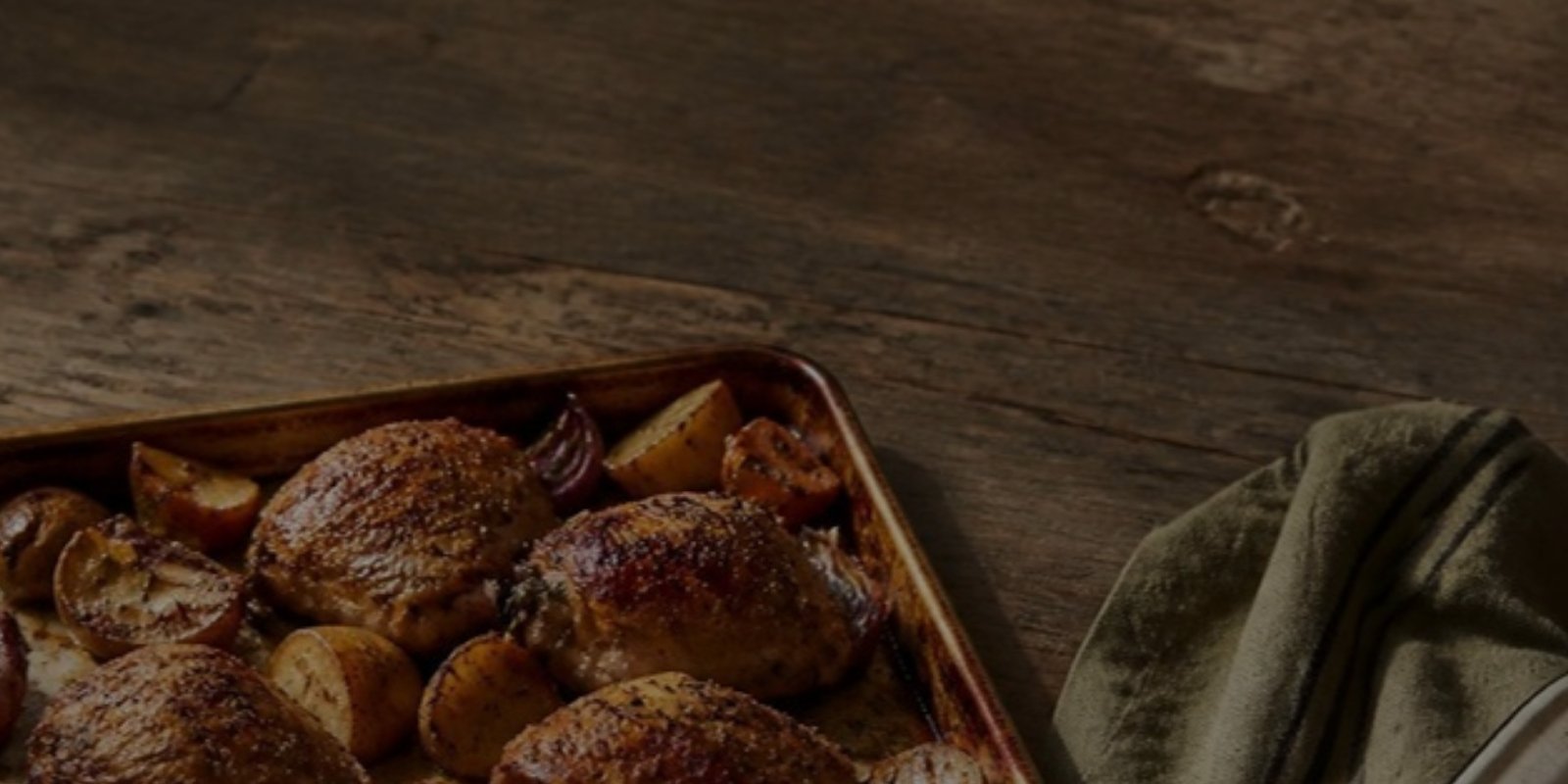
Formula 1: The sheet pan “everything”
The shape: one protein + two or three vegetables + oil + one seasoning. Into a hot oven. Walk away.
What you need:
- A protein: chicken thighs, sausages, chickpeas, firm tofu, salmon fillets
- Vegetables that roast well: potatoes or sweet potatoes cut small, broccoli, cauliflower, peppers, onions, carrots, zucchini
- A glug of oil, salt, and one thing with personality — a spice blend, smoked paprika, curry powder, garlic powder, or a squeeze of lemon at the end
How it goes:
- Heat the oven to around 425°F (220°C).
- Cut everything into roughly similar sizes so it cooks at roughly similar speeds.
- Toss with oil, salt and your seasoning right on the pan. Spread it out — crowding steams things instead of browning them.
- Roast. Hard vegetables like potatoes go in first; quicker-cooking things (fish, zucchini, broccoli) can join partway through.
- Check that the protein is cooked through before serving.
On that last step: Health Canada and FoodSafety.gov both list 74°C (165°F) for poultry pieces and ground poultry. For fish, Health Canada’s figure is 70°C (158°F); FoodSafety.gov’s is 145°F (63°C), or until the flesh is no longer translucent and separates easily with a fork. Chickpeas and tofu just need to be hot and as crispy as you like.
Why it works: it’s mostly unsupervised. You can sit down. You can stare at a wall. The oven does the labour.
Formula 2: The “fridge bowl”
The shape: a base + a protein + something fresh + something crunchy + a sauce.
This is the formula for when you have bits and pieces and no actual plan. It’s how half a cucumber, some leftover rice and a can of beans become a dinner instead of a sad mystery.
Mix and match:
- Base: rice (microwave pouches count), quinoa, noodles, bagged greens, couscous
- Protein: canned tuna or salmon, beans, a rotisserie chicken, leftover cooked meat, eggs, tofu
- Fresh: cucumber, tomatoes, shredded carrot, herbs, avocado, whatever bagged salad is still upright
- Crunch: toasted seeds, nuts, crispy onions, crushed crackers
- Sauce: soy sauce and a little sesame oil; plain yogurt with lemon and salt; peanut butter thinned with lime juice and hot water; or any bottled dressing you already own
How it goes: warm whatever needs warming, pile everything into bowls, sauce, done. Everyone can build their own, which quietly removes you from the role of short-order cook.
If you’re using leftovers here, the reheating guidance from Health Canada is to bring them to an internal temperature of 74°C (165°F). More on leftovers below, because that’s where tired people tend to take shortcuts.
Formula 3: Eggs for dinner
Eggs for dinner is not a failure. It’s a classic with excellent PR problems.
The shape: eggs + one or two vegetables + something savoury + toast or a salad on the side.
Three directions:
- The soft scramble: eggs gently cooked with butter, folded with spinach, a bit of cheese, maybe some leftover herbs. On toast.
- The frittata: sauté whatever vegetables are languishing (onions, peppers, mushrooms, greens), pour beaten eggs over, cook on low on the stovetop, then finish under the broiler or in the oven until set.
- The “egg on it”: fried egg on top of leftover rice, sautéed greens, or a fridge bowl from Formula 2.
How it goes (frittata version):
- Soften vegetables in an oven-safe pan with a little oil.
- Whisk eggs with salt, pepper and a handful of grated cheese.
- Pour over the vegetables. Cook gently until the edges set.
- Finish in the oven or under the broiler until the centre is set.
For egg dishes like frittatas and quiches, Health Canada’s safe internal temperature is 74°C (165°F); FoodSafety.gov lists 160°F (71°C). If you’re aiming to satisfy both, go with the higher number.
Bonus: a frittata is just as good cold the next day, which makes it a lunch you’ve already made.
Formula 4: Pantry pasta
The shape: pasta + a sauce from a jar or can + one vegetable + one finishing thing.
This is the one to keep permanently stocked for. If your cupboard holds dried pasta, a jar of tomato sauce (or canned tomatoes and garlic), and something green in the freezer, you are never more than about twenty minutes from dinner.
Upgrades that take almost no effort:
- Throw a handful of frozen peas or spinach into the pasta water for the last minute or two of cooking.
- Stir in a can of white beans or chickpeas with the sauce.
- Brown some ground meat or crumbled sausage first, then add the sauce. (Health Canada and FoodSafety.gov both list 71°C / 160°F for ground beef and 74°C / 165°F for ground poultry.)
- Finish with grated parmesan, a drizzle of olive oil, chili flakes, or lemon zest.
How it goes: boil the pasta, warm the sauce with your add-ins, save a splash of the starchy cooking water, toss everything together with a bit of that water so it all clings. That’s it. That’s the whole technique.
Formula 5: Fold it, toast it
The shape: a tortilla, pita or flatbread + cheese + a filling + something on the side.
Quesadillas, melts, flatbread “pizzas,” wraps. This is the formula for the night you can manage a frying pan and nothing more.
Fillings that work:
- Black or refried beans, cheese and salsa
- Shredded rotisserie chicken and whatever cheese you have
- Leftover roasted vegetables from Formula 1
- Spinach, feta and a little canned artichoke
How it goes:
- Fill half a tortilla, fold it over.
- Cook in a dry or lightly oiled pan over medium heat, pressing gently, until golden on both sides and the cheese is melted. Make sure any leftover filling is heated through.
- Cut into wedges. Serve with bagged salad, salsa, plain yogurt or sour cream, sliced cucumber — whatever qualifies as a side tonight.
Flatbread version: top a pita or naan with sauce, cheese and toppings, then bake or broil until bubbling.
The leftovers part (where tired people take shortcuts)
Every formula above makes leftovers easy. Leftovers also happen to be where exhaustion and food safety collide — the pot left on the stove “to cool” until morning, the container of something from “earlier this week” that may in fact be from last week.
Here’s what the official guidance actually says:
- Cool it and fridge it promptly. The USDA’s Food Safety and Inspection Service says leftovers should be refrigerated within two hours of cooking, and that perishable food left out longer than two hours — or one hour if it’s above 90°F (32°C) — should be thrown out. Health Canada says to refrigerate leftovers promptly in uncovered, shallow containers so they cool quickly.
- Use shallow containers. Dividing big batches into smaller, shallower containers helps them cool down faster.
- Know your window. Health Canada advises eating refrigerated leftovers within two to three days or freezing them. The USDA says three to four days. When the guidance differs, the shorter window is the more cautious one.
- Reheat properly. Both agencies say to reheat leftovers to 74°C (165°F), checked with a food thermometer. Microwaves have cold spots, so stir partway through and check in more than one spot.
- Label it. A strip of masking tape and a marker. Date it. Future You is not going to remember.
None of this is glamorous. All of it is a lot less unpleasant than the alternative.
Make next week’s tired-you a little less tired
You don’t need a meal-planning system with colour-coded tabs. You need a backup shelf: a small, boring, reliable stash that makes all five formulas possible without a grocery run.
- Cupboard: dried pasta, rice or microwave rice, canned beans, canned tomatoes or jarred sauce, canned fish, tortillas or flatbreads, a couple of spice blends, oil
- Fridge: eggs, a block of cheese, plain yogurt, one or two sturdy vegetables
- Freezer: frozen vegetables, a bag of chicken thighs or sausages, a loaf of bread
Then try this: write the five formulas on a sticky note and put it on the inside of a cupboard door. When 5:47 p.m. rolls around, you’re not deciding from scratch. You’re picking from a menu of five.
That’s the trick. Not more recipes. Fewer decisions.
And if dinner feels this hard most nights, not just the occasional bad week, it may be worth looking at the bigger picture. We dig into that in Why You’re Tired Even When You’re Doing Everything “Right”.
Once these formulas are second nature, they scale. A sheet pan doubles. A fridge bowl becomes a build-your-own bar. Which is, conveniently, most of what you need for having people over when you’re already tired.
The Tired-Cook Kit
- ThermoPro TP03 Digital Instant-Read Meat Thermometer — An inexpensive digital thermometer takes the guessing out of “is it done?” and makes it easy to check leftovers have reached 74°C (165°F). Shop on Amazon
- Nordic Ware Natural Aluminum Commercial Baker’s Half Sheet — A roomy half-sheet pan gives Formula 1 space to spread out, so your vegetables brown instead of steam. Shop on Amazon
- Lodge 10.25″ Pre-Seasoned Cast Iron Skillet — One oven-safe pan covers eggs for dinner on the stove or in the oven and toasts every quesadilla in Formula 5. Shop on Amazon
- Rubbermaid Brilliance Glass Food Storage Containers, Set of 9 — Smaller, shallower containers help big batches cool faster, and a strip of masking tape on the lid takes care of the date. Shop on Amazon
Muddy Finds may include affiliate links. As an Amazon Associate, Muddy Stilettos earns from qualifying purchases, at no extra cost to you.
The Good-Life One’s take
A beautiful dinner is a genuine pleasure. Linen napkins, something braised, a bottle opened for no particular reason.
But the good life isn’t only the special-occasion version. It’s also Tuesday. It’s a warm bowl of something on a night you were sure you had nothing left. It’s eggs on toast eaten at the counter, and choosing not to feel bad about it.
The best weeknight dinner is the one that gets made.
Pick a formula. Fill it with what you have. Sit down.
That’s dinner, handled.
More ideas for eating, hosting and getting away live on our Home, Food & Travel page.
ASK MUDDY
What’s your no-thought, nothing-left dinner — the one you could make half asleep? Tell us. We’re collecting.
JOIN THE MUDDY COMMUNITY
New stories every week about the messy, real parts of life. Join the free Muddy community at muddystilettos.ca.
ABOUT THE MUDDY HOME, FOOD & TRAVEL DESK
The Muddy Home, Food & Travel Desk covers the food, homes, trips and small luxuries that make real life better — from Tuesday-night dinners to the weekend away you’ve been promising yourself.
Featuring The Good-Life One: finds the places, recipes, hotels and little luxuries actually worth knowing about — and understands Tuesday night, budgets and carry-on limits.
Food-safety information in this article is general and educational. Follow the guidance from Health Canada, the USDA or your local public health authority, and consult a healthcare provider about individual dietary needs.
Sources
- Safe Minimum Internal Temperatures — FoodSafety.gov (U.S. Department of Health and Human Services)
- Safe internal cooking temperatures — Health Canada
- Food safety tips for leftovers — Health Canada
- Leftovers and Food Safety — USDA Food Safety and Inspection Service
0 Comments