
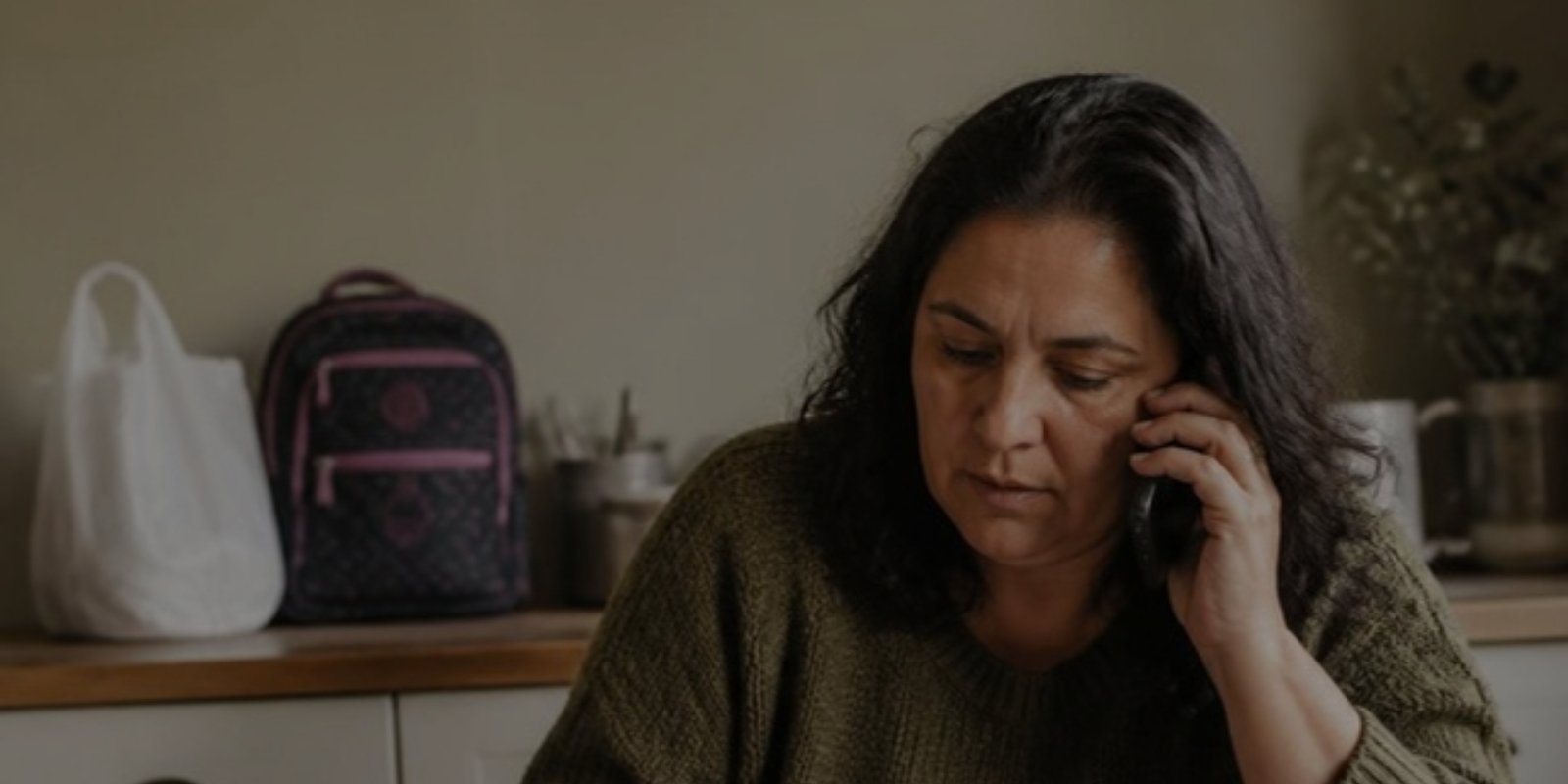
Let's imagine a Tuesday. The school calls at 10:12 a.m.
At 10:14, your phone lights up again. This time it's your mom's number. Or the pharmacy. Or the care home. Or your brother, asking if you've "heard anything," which is a polite way of saying he'd like you to have heard something.
You're in a meeting. Technically.
Welcome to the sandwich years — the stretch of life where you're raising children (or supporting adult ones) while your parents start needing you too.
If this is where you are, two things are true. You have a lot of company. And the reason it feels this heavy is not a personal failing. It shows up in the data.
How common is this, really?
More common than most people realize.
In the U.S., a Pew Research Center survey found that 54% of adults in their 40s were "sandwiched" — meaning they had a living parent 65 or older and were either raising a child under 18 or had financially supported an adult child in the past year. Across all adults, the figure was 23%.
AARP and the National Alliance for Caregiving's 2025 report estimated that 63 million Americans — nearly one in four adults — provided ongoing care to someone in the past year. Nearly one in three of those caregivers was also raising children under 18. Among caregivers under 50, that rose to 47%.
In Canada, Statistics Canada's 2022 Canadian Social Survey found about 1.8 million people were "sandwich caregivers" providing unpaid care to both children and care-dependent adults. That's 13% of the 13.4 million Canadians aged 15 and older who provided unpaid care. The largest age group was 35 to 44, and 60% were between 25 and 54.
Prime career years. Prime parenting years. Prime "everyone needs something from you" years.
Why it lands so hard on women
Being "sandwiched" describes your family situation — having both an older parent and kids who still depend on you. Who actually provides the care is a different question.
Statistics Canada found that in 2022, 52% of women provided care to children or care-dependent adults, compared with 42% of men. Among sandwich caregivers specifically, 62% were women.
Women also put in more hours. Among unpaid caregivers of adults, the median was 10 hours a week for women and six for men.
And the toll was uneven. Among Canada's sandwich caregivers, women were more likely than men to report negative effects on their:
- health and well-being (93% vs. 75%)
- family relationships (50% vs. 38%)
- finances (41% vs. 28%)
Ninety-three per cent. That is not a fringe experience. That's nearly everyone.
Ninety-three per cent. That is not a fringe experience. That's nearly everyone.
What it does to your energy, your money and your work
Your energy
Among all Canadian unpaid caregivers in 2022, women were more likely than men to report feeling tired (62% vs. 48%), worried or anxious (50% vs. 37%), and overwhelmed (45% vs. 27%). About three in ten caregivers overall said their sleep was disturbed.
In the U.S., the AARP report found one in five caregivers was in fair or poor health, and nearly one in four found it hard to take care of their own health because of caregiving.
If you're running on empty, don't automatically chalk it up to "just stress" — persistent fatigue is worth checking out. We go through common causes in Why You're Tired Even When You're Doing Everything "Right".
Your money
Caring for two generations often costs money as well as time. AARP's 2025 report found nearly half of family caregivers had experienced at least one major financial impact, like taking on debt, stopping saving or struggling to afford food.
A national U.S. study cited in the Surgeon General's 2024 advisory on parents' mental health found that adult children caring for an older parent while also raising a child under 18 were more likely to report substantial financial difficulty (23.5% vs. 12.2%) and emotional difficulty (44.1% vs. 32.2%) than those caring for an older parent without minor children at home.
If your household income looks fine on paper and still never seems to stretch, caregiving costs may be part of the picture. We break down that disconnect in She Makes $150K and Still Feels Broke. Let's Look at the Math.
Your work
According to AARP, six in ten U.S. family caregivers are also employed, and about half of those report work disruptions such as arriving late or leaving early. In Canada, 16% of caregivers in 2022 said they had adjusted their work schedule, 7% had reduced their regular hours, and 5% said they were unable to work a paid job because of caregiving.
Practical ways to make it more manageable
There's no tidy fix for caring for two generations at once. But there are ways to reduce how much of it lands on one person.
1. Get the whole picture on paper
Much of caregiving is invisible logistics: medications, appointments, insurance, bills, who has the spare key. Write it down in one place that other family members can see.
Try this
Put the invisible logistics in one shared place: medications, appointments, insurance, bills and who has the spare key, so other family members can see it.
Your parent should be part of this wherever possible. Respecting their independence and preferences matters, and conversations about the future tend to go better before a crisis than in an emergency room.
2. Have the sibling conversation
In many families, caregiving falls to whoever lives closest, has the most flexible job, or — let's be honest — is the daughter. It's worth naming that out loud.
Not everyone can contribute the same way. A sibling who lives far away may not be able to drive to appointments, but they might handle insurance calls, research services, pay for respite care or take over during your vacation. "Help when you can" rarely works. "You own the pharmacy and the insurance paperwork" works better.
Muddy tip
"Help when you can" rarely works. Give each sibling a specific job instead: "You own the pharmacy and the insurance paperwork."
3. Find out what support exists
This varies a lot by province, state and situation, but some starting points:
- In Canada, 211 is a free, confidential service that connects people with community, health and social services. Your province or territory's home and community care program is another place to ask about in-home supports.
- In the U.S., the Eldercare Locator, run by the federal Administration for Community Living, connects older adults and families with local services.
- Your parent's family doctor, hospital social worker or care coordinator can often point you toward local programs.
4. Know your work protections
Both countries offer some support for working caregivers, though the details and eligibility rules matter:
- Canada: Employment Insurance caregiving benefits provide temporary income support: compassionate care benefits (up to 26 weeks, for someone needing end-of-life care), the family caregiver benefit for adults (up to 15 weeks, for a critically ill or injured adult) and the family caregiver benefit for children (up to 35 weeks, for a critically ill or injured child). Eligibility rules apply. Job-protected leave itself comes from your provincial or territorial employment standards (or the Canada Labour Code if you work in a federally regulated industry).
- U.S.: The federal Family and Medical Leave Act (FMLA) allows eligible employees up to 12 weeks of unpaid, job-protected leave in a 12-month period to care for a parent, spouse or child with a serious health condition. Not every employer or employee is covered, and some states offer additional protections, including paid leave.
Check the official program pages, your employer's HR policies, or a qualified professional for your specific situation.
5. Protect a little of yourself
Respite isn't a luxury. It's how caregivers keep going. Even small, regular breaks count: a sibling taking one weekend a month, a friend doing a school pickup, a community day program for your parent.
And if what you're feeling has tipped from "exhausted" into persistently hopeless, anxious or depressed, please talk to your healthcare provider. Caregivers' health matters too.
The feelings nobody puts on the fridge
The sandwich years can stir up complicated emotions. Grief, as a parent changes. Resentment, sometimes, toward siblings, partners or even the person you're caring for. Guilt, about all of the above. And for many women, a sense that their own life — the one that was just starting to open back up as the kids got older — has been put on hold again.
That last one is worth naming. If you've ever caught yourself missing the person you were before all this, you're not alone. We wrote about that feeling in I Love My Kids. I Also Miss My Old Life.
None of these feelings make you a bad daughter or a bad mother. They make you someone carrying a lot.
None of these feelings make you a bad daughter or a bad mother. They make you someone carrying a lot.
The Mom One's take
The sandwich years ask you to be in two places at once, emotionally and often literally.
You can't be. Nobody can.
So the goal isn't to do it all perfectly. It's to stop doing it all alone.
The goal isn't to do it all perfectly. It's to stop doing it all alone.
Write it down. Hand some of it off. Ask the sibling. Call 211 or the Eldercare Locator. Tell your manager more than you think you should. Take the respite when it's offered, without explaining yourself.
Your kids need you. Your parents need you.
And — this part gets forgotten — you need you too.
Find more honest conversations about family life at The Muddy Family Desk.
ASK MUDDY
If you're caring for both kids and parents, what's the one kind of help that would actually make a difference right now?
JOIN THE MUDDY COMMUNITY
Life gets messy. We talk about it. Join the free Muddy community at muddystilettos.ca for new stories every week — honest, researched and written for real women.
ABOUT THE MUDDY FAMILY DESK
The Muddy Family Desk covers the real work of family life — parenting, partnership, caregiving and the invisible load — with honesty, humour and room for every kind of family.
Featuring The Mom One: loves her kids fiercely. Occasionally hides from them.
Muddy Family content is educational and informational and is not a substitute for individualized medical, legal, financial or employment advice. Benefit and leave rules change and depend on your circumstances; check official sources or a qualified professional.
Sources
- More than half of Americans in their 40s are "sandwiched" between an aging parent and their own children, Pew Research Center
- New Report Reveals Crisis Point for America's 63 Million Family Caregivers (Caregiving in the US 2025), AARP & National Alliance for Caregiving
- Who are the sandwich caregivers in Canada?, Statistics Canada
- More than half of women provide care to children and care-dependent adults in Canada, 2022, Statistics Canada, The Daily
- Parents Under Pressure: The U.S. Surgeon General's Advisory on the Mental Health & Well-Being of Parents, U.S. HHS
- EI caregiving benefits, Government of Canada
- Family and Medical Leave Act, U.S. Department of Labor, Wage and Hour Division
- Eldercare Locator, U.S. Administration for Community Living
- 211 Canada, United Way Centraide Canada and 211 network
0 Comments